Procurement
Beyond Nearshoring: The Leadership Challenge Behind Successful Expansion into Mexico


Mexico has become central to many US companies’ plans for more resilient North American operations.
Its proximity to the US, skilled manufacturing workforce and position within the USMCA make it a natural choice for organizations reassessing where and how they grow.
The commercial case remains strong, but it is also becoming more complex. Tariff uncertainty, the 2026 USMCA review, infrastructure pressure and rising competition for experienced leaders are changing the conversation. Nearshoring success in Mexico depends on whether an organization can build the leadership team needed to run the business well on both sides of the border.
Mexico’s role in North American supply chains has grown significantly in recent years. Cushman & Wakefield’s 2025 Mexico Industrial Labor Report describes the country as a major centre for industrial nearshoring, with manufacturing and logistics growth reshaping labour demand across the region. The report also notes that Mexico absorbed more than 43 million square feet of industrial space in 2022, a sign of the scale of investment that has already taken place.
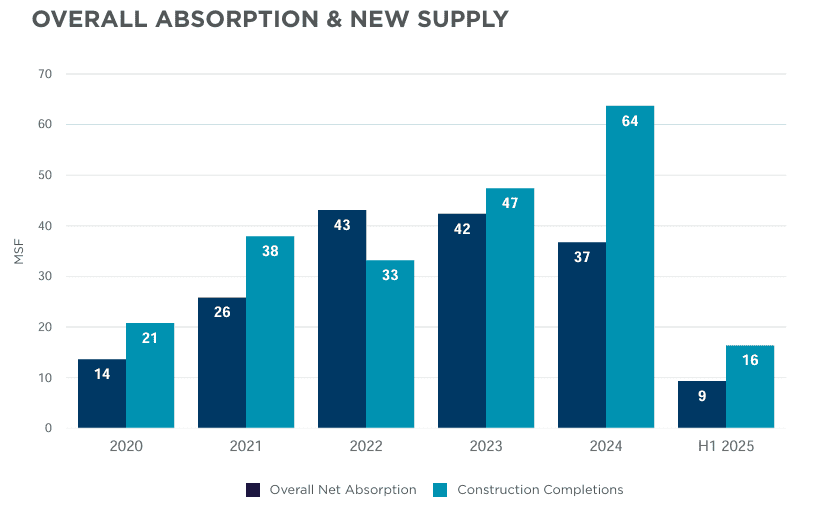
Yet the decision to expand into Mexico is being made in a less predictable trade environment. The OECD has warned that higher barriers to trade and policy uncertainty could weigh on global growth, while its Mexico outlook points to continued exposure to external pressures. At the same time, reporting from El País has shown that nearshoring activity has started to recover after tariff concerns, with manufacturing representing around 22% of Mexico’s GDP and industrial demand picking up again in parts of the market.
For US companies, this creates a clear message: Mexico still offers opportunity, but the margin for poor execution is narrowing. Expansion plans need leaders who can:
One of the most common mistakes companies make is treating Mexico as an extension of the US labour market. The two markets are deeply connected, but they are not the same.
Executive candidates in Mexico will often assess an opportunity through a different lens. Employer reputation, decision-making authority, local investment plans, reporting lines and long-term career prospects can carry as much weight as compensation. A senior candidate may be less likely to move for a role that appears to be locally accountable but centrally controlled from the US.
Compensation also needs careful attention. Benchmarking against US leadership structures can create unrealistic expectations, while relying only on local averages can lead companies to underprice high-quality talent. The strongest candidates are often already leading complex operations for global businesses. They know their value and they will compare any approach against both local and international opportunities.
This is particularly important for roles such as:
On top of functional expertise, these positions also require the ability to work across cultures, manage regional stakeholders and build trust with teams, suppliers, authorities and headquarters.
Cross-border leadership hiring is not only about finding bilingual executives. Whilst language matters, fluency alone does not make someone effective in a US-Mexico operating model.
The leaders who make the greatest impact tend to understand both business cultures. They can explain Mexico’s operating realities to US leadership without slowing decisions. They can also translate corporate expectations into clear priorities for local teams. This ability is valuable because many of the most difficult issues in expansion are about alignment, pace, accountability and trust.
For example, a US business may expect rapid hiring for a new plant, while the local team may be facing limited availability of experienced supervisors in a specific industrial corridor. A leader with strong cross-border judgement can address both sides of the issue: explaining the local constraints, adjusting the hiring strategy and keeping the business focused on the wider plan.
The same applies to supplier development, labour relations, compliance and safety culture. In each case, the right leader helps reduce friction between strategy and delivery.
Mexico has deep pools of manufacturing, engineering and supply chain talent, but availability is uneven. Candidate supply can vary sharply between Monterrey, Saltillo, Querétaro, Guadalajara, Mexico City, Tijuana, Juárez and the Bajío region. Sector experience also matters. Automotive, aerospace, electronics, food and beverage, packaging, chemicals and energy each have different talent dynamics.
This is why companies need to map the market before hiring begins. A clear view of where talent sits, what competitors are paying and how mobile senior candidates are can help reduce risk. It can also identify whether a business should hire locally, relocate within Mexico or consider a cross-border profile.
Too often, leadership hiring comes after the investment case has already been approved. By that point, timelines are fixed, expectations are high and the pressure to hire quickly can compromise quality.
US companies expanding into Mexico should identify critical leadership roles early. They should also decide which decisions will sit locally, which will remain in the US and how Mexico-based leaders will be represented in regional planning.
The most successful companies will be those that treat talent as part of the expansion strategy from the start. They will know:
Nearshoring may create the reason to invest in Mexico, but leadership will determine whether that investment works. For organisations assessing expansion, strengthening an existing Mexico operation or building a North American leadership structure, the talent question should be addressed early and with evidence.
To discuss your organisation’s executive hiring needs in Mexico or across North America, please get in touch with Proco Group.
–
Juliana Bustamante
Partner | LATAM